What is my core?
Your core is pressure.
Pressure from the inside, pushing out in every direction.
Your abs are part of the story. Your diaphragm, abdominal wall, back muscles and pelvic floor work together to manage pressure inside your abdomen as you breathe, move and carry things.
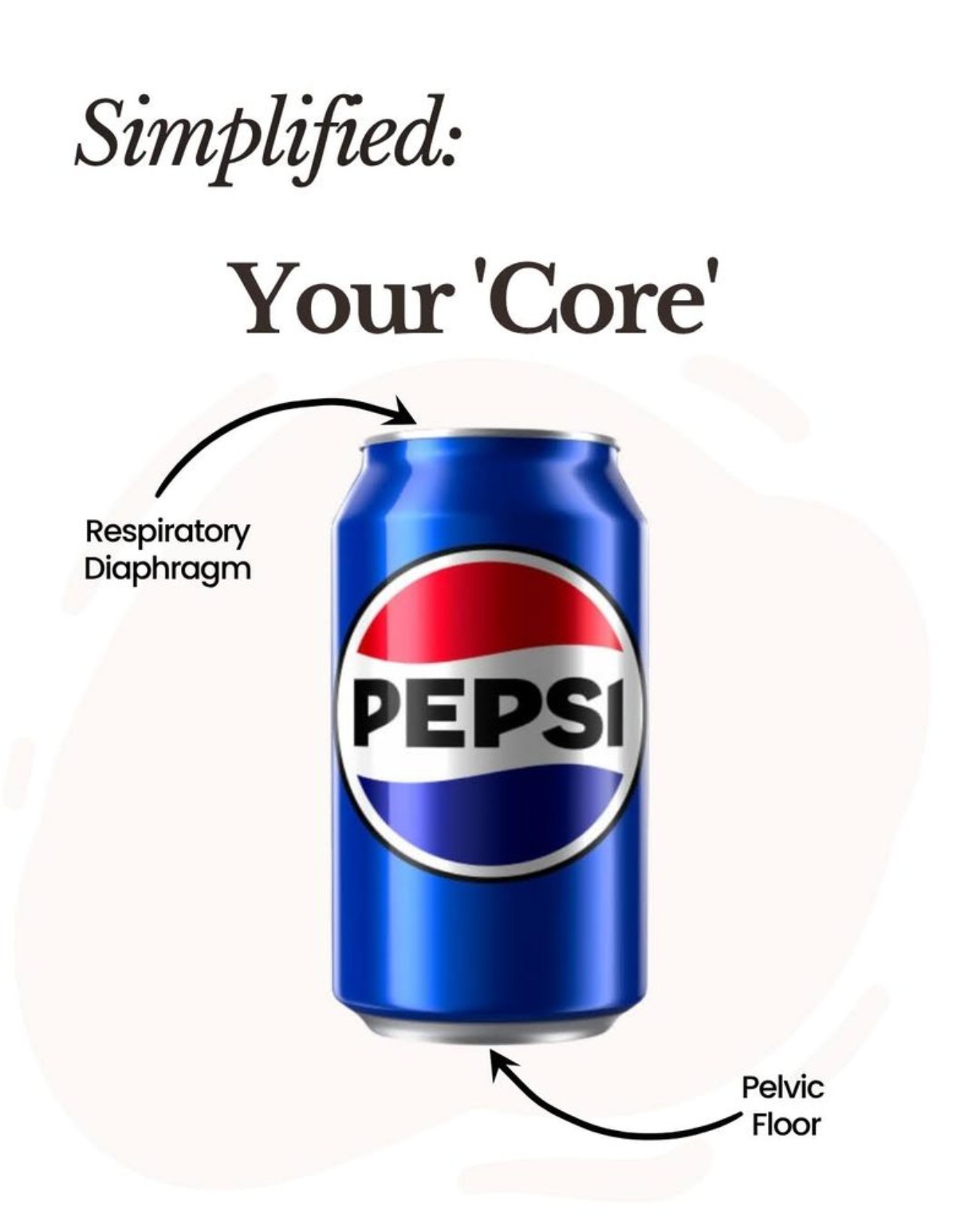
Sealed. Pressure inside the can pushes outward in every direction. That extra pressure helps the can hold its shape when you squeeze it.

Opened. The hiss is gas escaping. As the extra pressure drops, the same can becomes easier to squeeze.
Meet the parts that manage pressure
Tap a label around the Pepsi can to see how that part of your core works. Switch between breathing in and out to explore what moves in your body.

Diaphragm
The diaphragm is the main breathing muscle. It sits under your lungs and moves down as you breathe in, making more room for your lungs to expand. It can also help support your trunk when you move.
Abdominal wall
The layers of muscle around the front and sides of your abdomen can make room as you breathe. They also help manage pressure inside your abdomen when you move or carry something.
Pelvic floor
These muscles span the base of your pelvis and help support the organs above them. They can move a little with each breath as the space above them changes shape.
What moves when you breathe?
In. The diaphragm moves down. The abdomen can expand and the pelvic floor can move slightly downward.
Out. The diaphragm rises as it relaxes. The abdomen can narrow and the pelvic floor can move back up.
A small MRI study in eight healthy women observed this breathing pattern. See the published MRI and what it can tell us.

How does a Pepsi can explain core pressure?
A can makes outward pressure easy to picture. Your trunk can change shape and adjust support from moment to moment. Think about the difference between breathing quietly on the couch and lowering a bag of groceries to the floor.
Read the full pressure explanationStart with your question
Where does core pressure come from?
See how the diaphragm, abdominal wall and pelvic floor work together.
Read the pressure guide Back painDoes back pain mean my core is weak?
See why one movement can feel fine while another one catches.
Read the back pain guide Everyday movementWhy is the way down harder?
Explore what changes when you sit back down or lower a load.
Read the lowering guide Movement frameworkWhat makes a movement feel easy?
Explore available motion, coordination and adapting to a different setup.
Read the framework guide For cliniciansHow would I test this during an exam?
Pick a task, change one part of it and see what happens on the retest.
Read the clinical guide ResearchWhat have researchers actually measured?
Read selected studies on pressure, breathing, movement and back pain.
Explore the researchWhat changes when the task changes?
Compare how your body handles standing up, sitting down, carrying a load or changing direction.
Open the movement toolCommon questions
Do I need to squeeze my abs all day?
Core support changes with the task. A heavy lift and a quiet breath place different demands on your body. Read how pressure changes with movement.
Is air going into my belly when I breathe?
The air goes into your lungs. As the diaphragm moves down, your abdomen can change shape around what’s already inside. See the parts involved.
Does more pressure mean better support?
The amount that makes sense depends on the task. Lowering a bag calls for enough support to guide the load and enough freedom to keep moving. Read how the body controls the way down.
Core Pressure Restoration
David Quenzer, DPT uses Core Pressure Restoration as a name for a task-based approach to assessment. It asks what motion is available, how the person uses it under load, and whether the change carries into life outside the clinic. The approach draws on IPA Functional Manual Therapy and research on trunk mechanics. Its methods and outcomes as a package have not been independently established. [5] [3]